

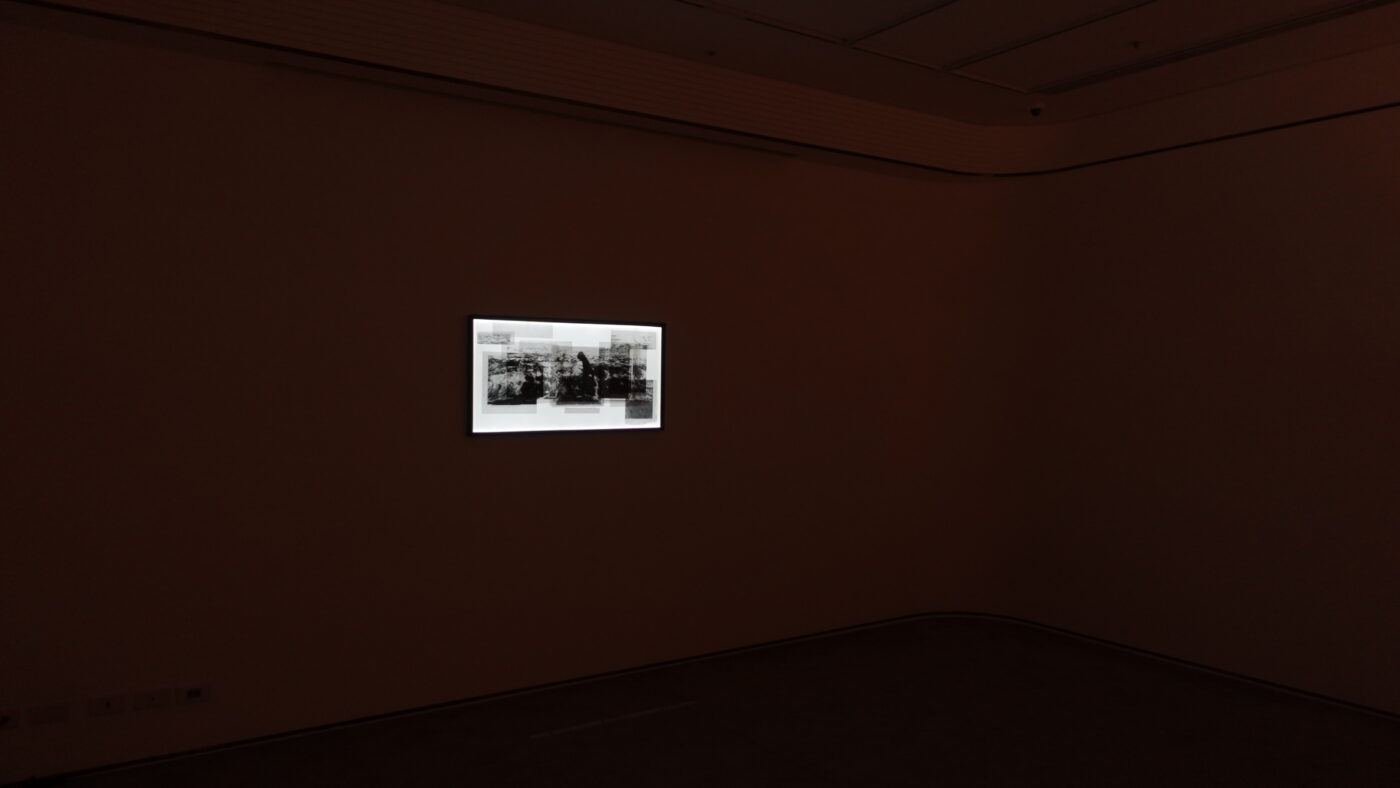
In the Gallery
The Lost Shoreline glimmers before you,
like a slit opening onto the outside world.
Gradually, it grows brighter,
like waves surging in, overflowing your vision.
Delicate layers of paper fibers stack memory upon memory,
blurred contours carry lingering shadows.
Thoughts and images are submerged in water,
unfolding endlessly, without end.
-1400x713.jpg)
YANG Chung-Ming, Flora of Formosa: The Lost Shoreline 2025. Watermark, Handmade Paper, Natural Dye, LED Light Panel.
The Boy’s Secret Shoreline
The boy in The Lost Shoreline is the son of a friend of the artist. When YANG visited the family, who were about to move away, the boy led him to his secret hideout, sharing along the way his reluctance to leave. In that moment, the artist felt a layered overlap: his own past memories, the boy’s present existence, anxieties about the future, and attachment to the present. He recognized in the boy’s experience a reflection of his own past helplessness in having no control over the shape of one’s life. The boy’s presence planted an emotional connection and projection within the artist’s heart.
Farewell, loss, and regret—these are the nutrients and fresh air that sustain YANG Chung-Ming’s creations. He admits that sadness carries a uniquely stirring energy, moving him profoundly, making him both sorrowful and gratified, reminding him of words from Allan Poe “Melancholy…the most legitimate of all the poetical tones.” 1 Consequently, his works always carry an undercurrent of melancholy alongside beauty. In this piece, he uses blur, overlap, and oscillation to evoke flowing water, swelling waves, and the haze of memory, expressing both the boy and the artist’s own past. This abstract texture, difficult to render solely through imagery, is achieved through the “watermark handmade paper” technique developed in collaboration with the Taiwan Forestry Research Institute.


Turbulent Water in Stillness
From a distance, many assume the glowing work is a screen or projection. Up close, they discover it is handmade paper backed by a lightbox. Yet after staring for a while, the water around the boy begins to feel like real tides, waves rolling ever closer, even though one knows the work is static.
The handmade paper, lifted from water, retains water’s softness and flow; frayed edges and inked pulp fibers form a poetic, romantic language rather than a descriptive one. To grasp the material’s metaphor, one must set aside analysis and simply feel.
The composition is built from numerous sheets of watermark handmade paper of varying sizes, repeated and collaged. Similar but never identical images overlap, forming lingering shadows that extend endlessly—sometimes converging, sometimes dispersing—like currents gathering from many places only to return to each. The work exudes a boundless atmosphere, almost spilling beyond its frame.
The piece embodies the logic of printmaking without adhering to “editioning.” It has no plate boundaries; typically, prints leave white margins around the image. In The Lost Shoreline, the paper is cut and assembled to break free from these limits. Likewise, the multiplicity characteristic of printmaking no longer serves identical reproductions; it manifests in the layered shadows, creating a one-of-a-kind work.


The Creator as First Viewer and Final Arbiter
YANG Chung-Ming reflects that his pursuit and understanding of art have constantly evolved. As a child, art was a way to earn applause; gradually, it became inseparable from his life. Today, creation is the sum of one’s existence in the world. Countless conscious and unconscious choices shape the final form of a work. Hundreds of decisions give rise to what remains. Each retained image embodies persistent contemplation and deliberation, still deemed worthy of creation.
Yet every work contains elements beyond the creator’s complete control or anticipation. These fragments are chosen, preserved, allowed, and welcomed—like an actor’s spontaneous performance, sparks igniting between materials, metaphors, and symbols. As both director and first audience, the artist must exercise discernment, feeling and judging whether the work aligns with his taste. To do so, “knowing one’s own texture” is vital. Awareness of one’s traits and uniqueness guides energy; even vulnerability, when consciously recognized, can become a source of creativity.

One Room, One Work: Time Shared Between Viewing and Creating
As the first artist featured in the 1111 project, YANG Chung-Ming believes encountering an unfamiliar work is like meeting a new friend at a party: it takes time to understand their background, thoughts, and cares. This project is like a solitary party, just you and the unknown work, alongside others awaiting the same encounter.
This situation creates a productive tension for both artist and viewer. For the artist, a work exists differently in the studio than in the gallery; the atmosphere and energy generated by a singular work in an empty space depend entirely on imagination and arrangement, a significant challenge.
For viewers, the anxiety of “not understanding” is ever-present. Compared to large exhibitions with hundreds of works, a single piece provides a moment of respite from information overload, while simultaneously inviting intimate dialogue. At first, visual, rational, analytical, and research stimuli collide; only after a period of settling can one cast aside thought and engage directly with the work. This focus mirrors the state of creation itself. If a work requires time to be forged, shouldn’t it also require time to be fully perceived and felt?
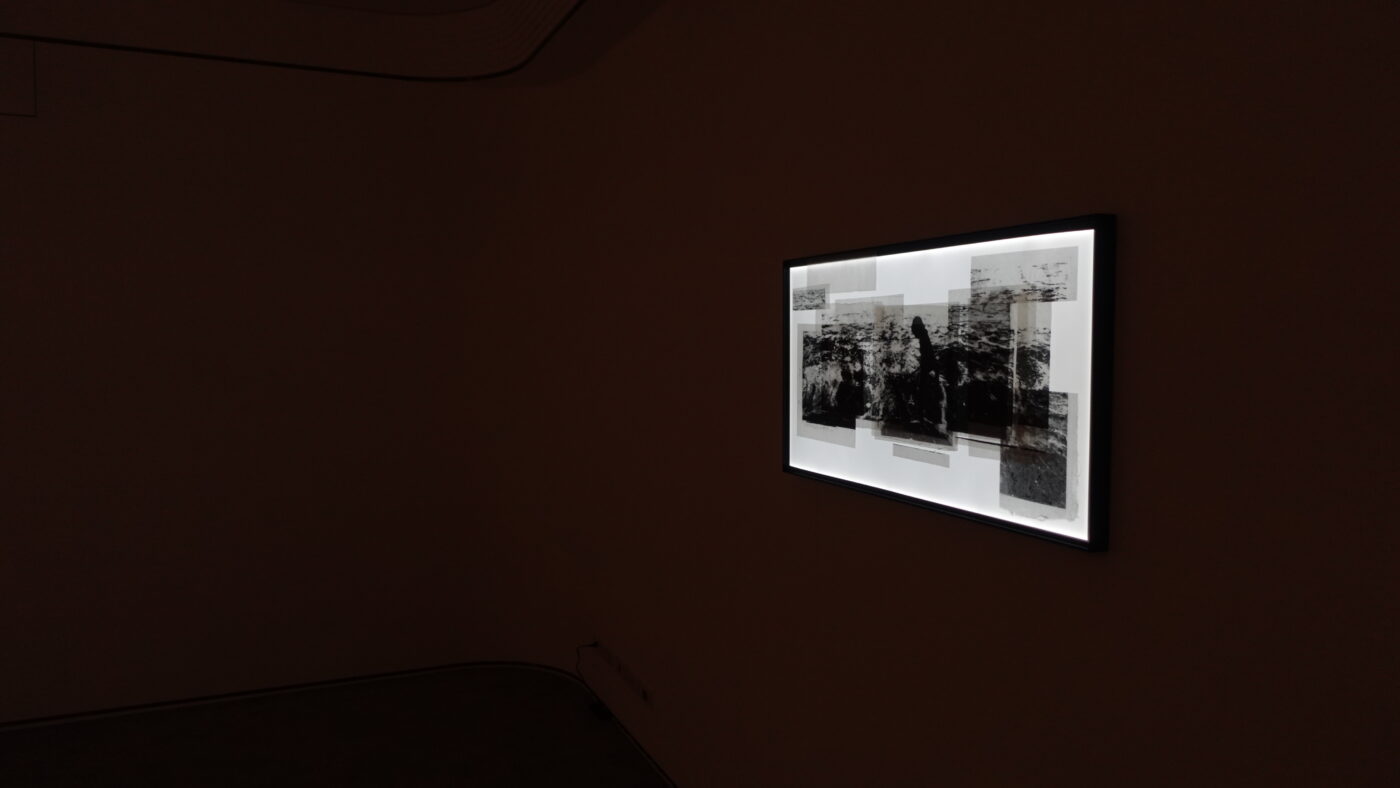
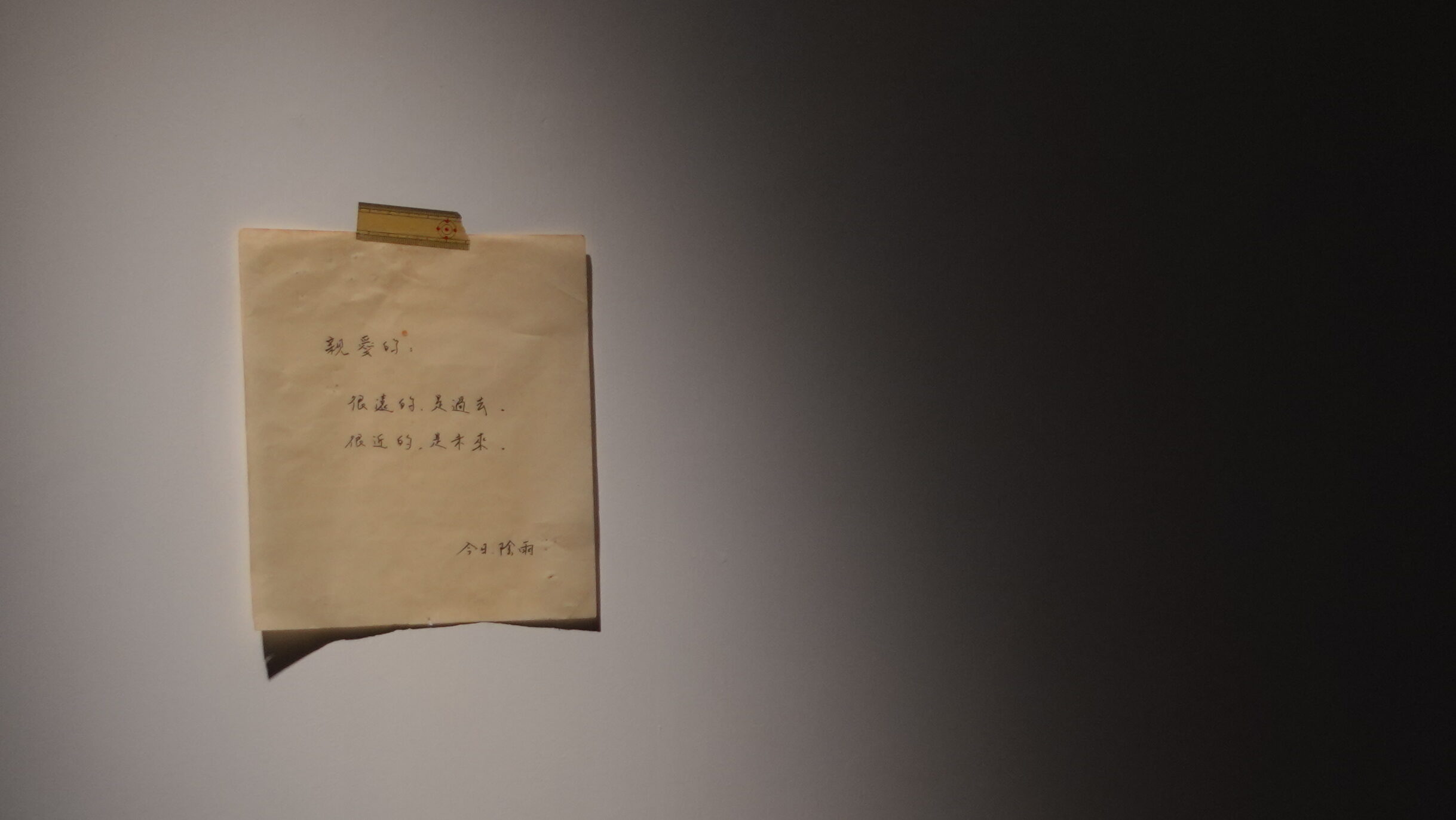
Exhibition “1111 project: The Lost Shoreline ” and a note left by the artist YANG Chung-Ming.

The event: Artist on site|YANG Chung-Ming “1111 project: The Lost Shoreline”
- This sentence is from The Philosophy of Composition, an influential essay by Edgar Allan Poe, using his poem The Raven as a detailed example of how to deliberately craft a specific emotional response in the reader. The essay first appeared in the April 1846 issue of Graham’s Magazine.
Reference: https://www.poetryfoundation.org/articles/69390/the-philosophy-of-composition ↩︎
About the artist
楊忠銘 Yang Chung-Ming
Related Linkd
1111 project: The Lost Shoreline
Artist on site|YANG Chung-Ming “1111 project: The Lost Shoreline”
“1111 Project” Call for Submission
曜畫廊 Gallery de sol
Situated within the prestigious Mandarin Oriental Hotel, Gallery de sol positions itself as an academically oriented space focused on art historical research, dedicated to promoting contemporary print-based artworks.

 中文
中文